Pelvic Health Physiotherapy in Valemount & McBride
Pelvic health physiotherapy offers respectful, individualized care for pelvic floor symptoms and concerns related to pregnancy, postpartum recovery and return to activity. You can ask questions, discuss your goals and help shape your care plan at every step.
We often don’t discuss pelvic health concerns with friends or family, meaning we may not fully understand what is going on, what is normal and what is not, and what is fixable. Your therapist knows how to navigate those conversations in a comfortable environment and allows you to explore your symptoms, and what may be causing them, at your own pace.
Your consent and comfort is our priority. Sometimes, performing an “internal” assessment or treatment can be helpful to diagnose or treat certain conditions. Internal work involves working with muscles that can only be found inside your vaginal or anal canal. Although our therapists are fully qualified to do internal assessments, we understand and respect the intimate nature of that work; please know that your assessment generally does not start, nor need to include, an internal assessment, and we will always base our sessions around your needs, comfort and goals.
Treatable conditions include:
Urinary leakage
fecal leakage
prolapse
pelvic pain
pregnancy - pre- and post-partum


Meet Your Therapist
Vanessa McGibbon (PT) has been doing Pelvic Floor Physiotherapy since 2020.
She loves helping change people’s lives with relatively simple treatments and is comfortable going at your pace. She values giving you autonomy over your own body and treatment and is here to help you however you need.
Want a sneak preview of Pelvic Floor Therapy? Start with some general education!
Pelvic Floor Functional Exercise
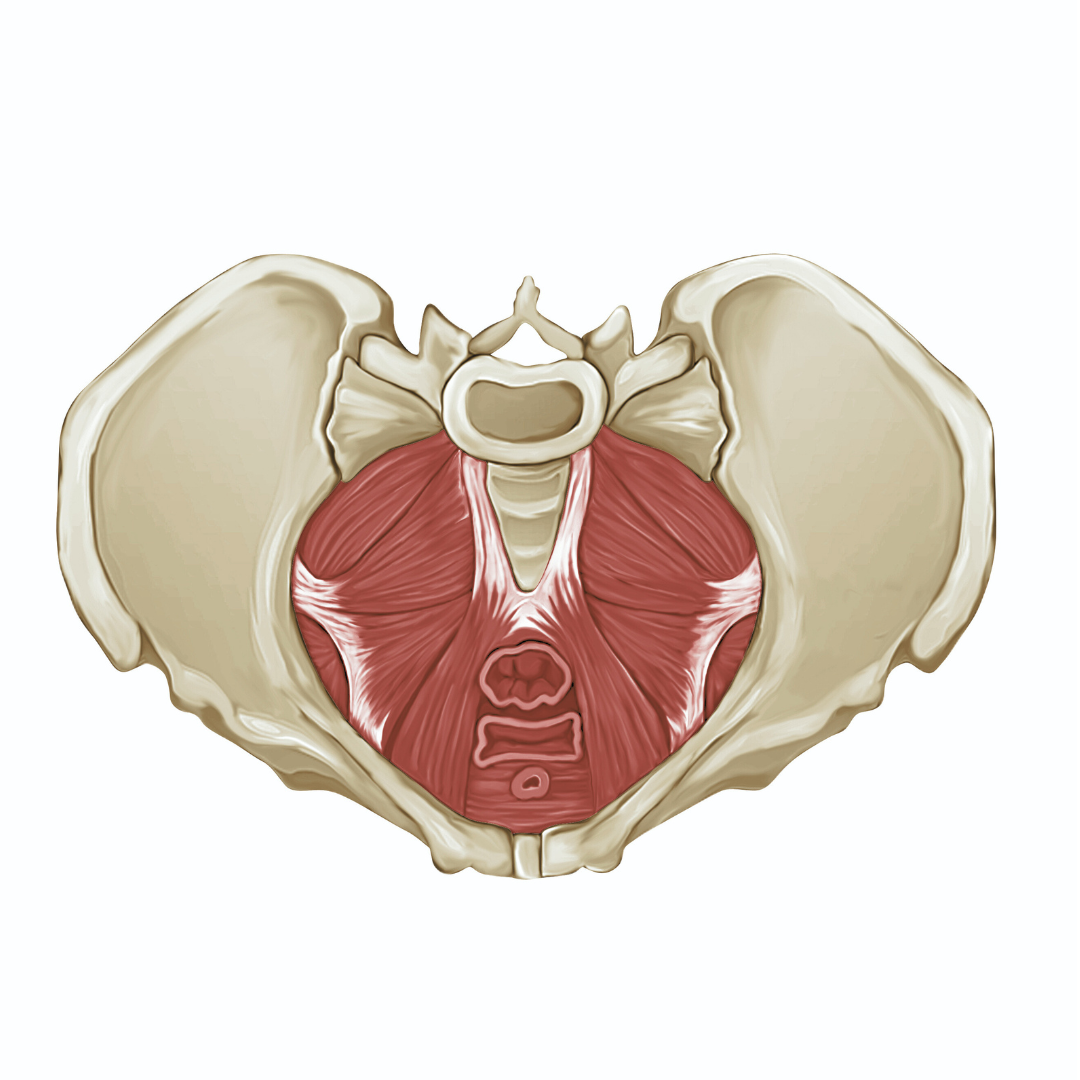
Your pelvic floor is a group of muscles that sit in your pelvic bone. It supports the weight of your organs, including your bladder, bowel, and uterus/prostate. This muscle group generally can have two issues:
1. Hypertonicity – the muscle group is too tense and doesn’t fully relax
2. Weakness – the muscle group is not strong enough to handle the stress put on it
We first work on awareness of your pelvic floor by doing contractions and relaxations.
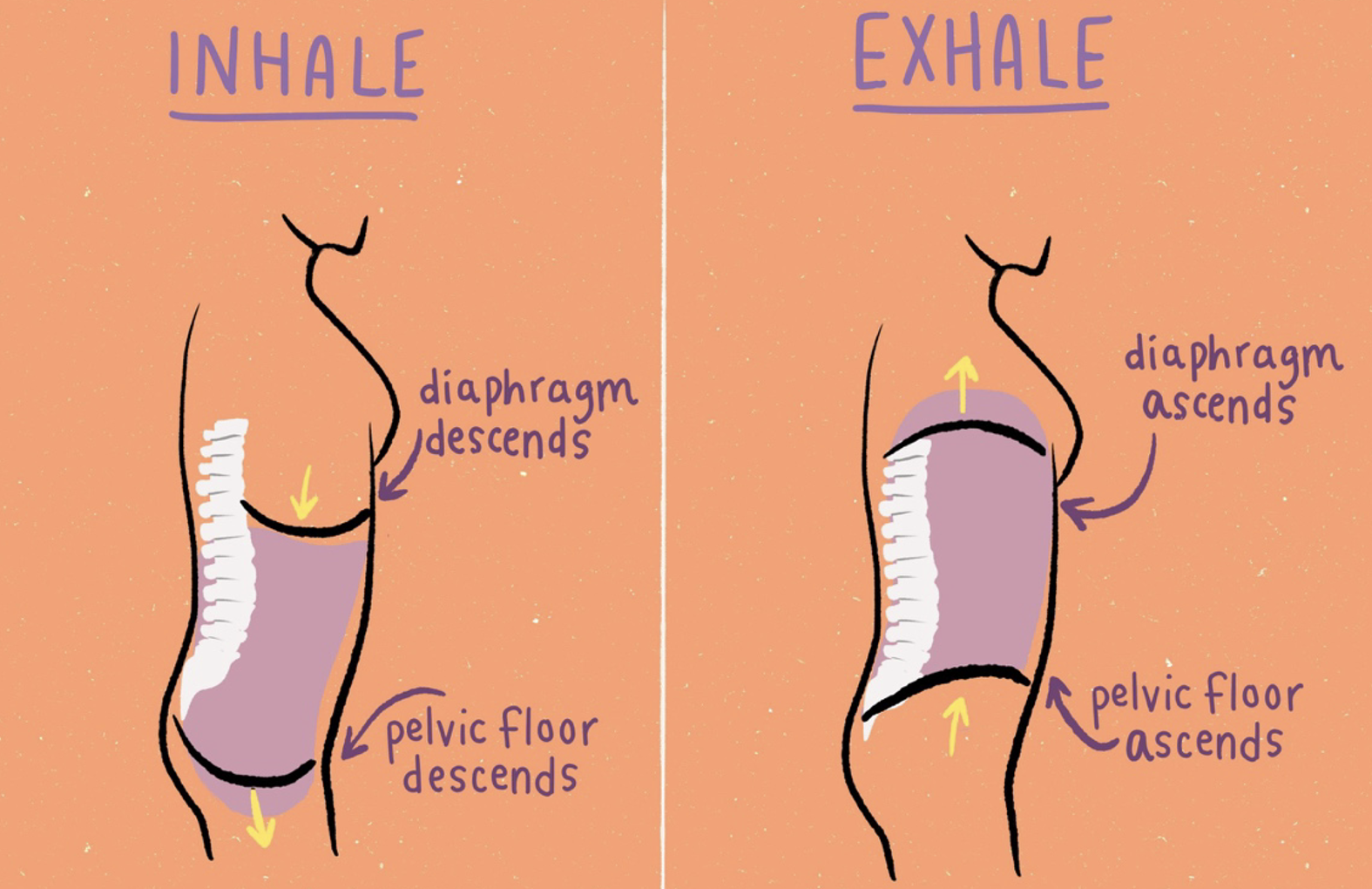
One thing to note is that the pelvic floor works together with your diaphragm, which sits at the base if your lungs. Your diaphragm is a dome shape at rest, and pulls down as you breathe in.
We want the pelvic floor and diaphragm to work together, so that when you breathe in, your pelvic floor relaxes, and when you breathe out, your pelvic floor contracts.
Practice this lying down first. In this position, we are able to breathe in through our belly (diaphragm) and relax well. The pelvic floor is unweighted. Sitting and standing are more difficult and are positions you progress to once you have a good awareness of your pelvic floor.